Posted on Leave a comment

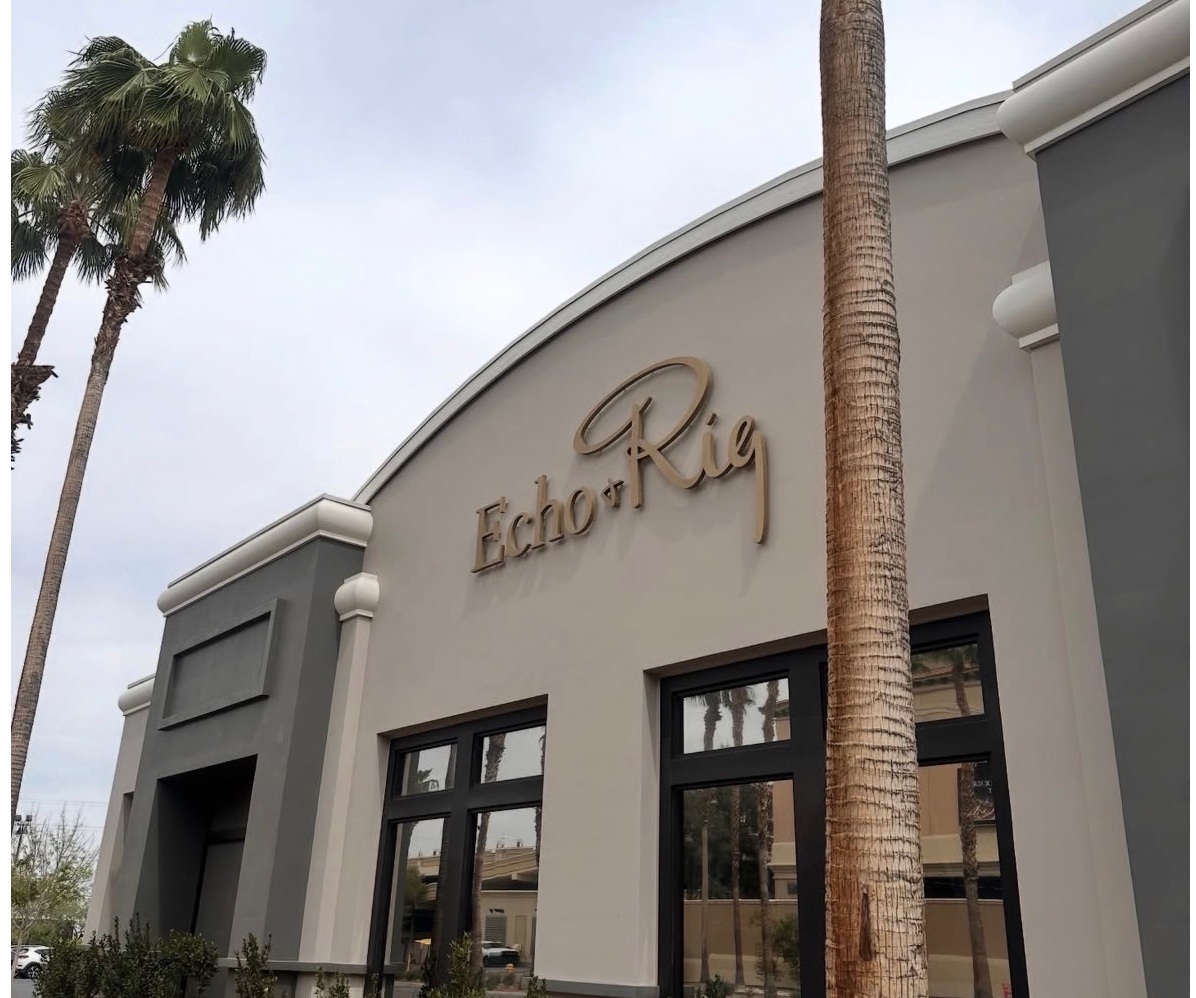
Echo & Rig’s New Chef’s Table Delivers a Full Steakhouse Dinner for $55

It’s early Monday evening, shortly before the start of a sold-out dinner service, and the kitchen at Echo & Rig’s Henderson location is already humming. The team is preparing for the opening night of a new Monday series. It’s called Chef’s Table – a more inclusive version of a coveted dining experience.

Instead of a traditional chef’s table, usually reserved for V.I.P.s and often tucked into a corner of the kitchen, this one takes over the entire restaurant.

“Every table is a chef’s table,” says chef/owner Sam Marvin. “Everyone eats the same thing.”

The concept is simple, but ambitious: a single, curated menu served to the full room, designed to deliver an exclusive, chef-driven experience. Here, it’s scaled up to roughly 200 seats — and priced to bring people out on a night when most restaurants struggle.

The debut dinner, a steak frites–style supper, is priced at $55 per person and leans heavily on value. It begins with an amuse-bouche — house-cured Wagyu pastrami on pumpernickel — followed by unlimited Caesar salad, a 12-ounce fullblood American Wagyu New York strip, unlimited Kennebec fries, and a berry cobbler with vanilla ice cream.

The steak is the centerpiece, sourced from a New York–based producer and new supplier for Echo & Rig.

“I’ve never seen American Wagyu that looks like this,” he says. “It’s off the charts.”

Sam Marvin shows off his fullblood American wagyu

That kind of product is typically associated with much higher price points — a fact Marvin leans into when describing the series. At many Las Vegas steakhouses, even off-Strip, a lesser steak served a la carte can approach or exceed the full cost of this meal.

Chef’s Table is not a one-night experiment. The series will continue on select Mondays throughout the year, each built around a new theme, with the entire restaurant sharing the same menu and experience.

The next dinner, scheduled for April 20, is expected to focus on seafood, with Marvin working closely with longtime vendors to source premium product and maintain the same value-driven approach.

“I’m able to leverage relationships I’ve had for 35 years,” he says. “We’re bringing in things people can’t imagine — at a fraction of the cost.”

Optional add-ons for the debut dinner — including shrimp cocktail, mac and cheese, and spinach — along with curated cocktails and wine pairings, allow guests to customize the experience. But the core idea remains unchanged: one menu, one night, one shared table.

If the concept catches on, Marvin says the goal is to build toward more frequent events, potentially turning Monday into a signature night for the restaurant.

In a city where steakhouses have become prohibitively expensive, Chef’s Table flips the script — offering a full steakhouse experience at a price point designed to fill the room.

You can hear Sam Marvin discussing the Chef’s Table series on the April 3 episode of the Food and Loathing podcast.

Posted on Leave a comment

Reducing the Variance

Bob Dancer

Last week I wrote that I played ten-coin $5 9/7 Double Bonus Good Times Pay for a promotion at Caesars Atlantic City. This is a relatively rare game with multipliers, and if you’re not familiar with how the multipliers work you might want to read (or re-read) last week’s article before you tackle this one.

Over the first four days of play, including the play-up bonuses I received for every $150,000 worth of coin-in and the weekly free play for the week that ended Saturday and also for the week that began Sunday, I was ahead about $25,000 for the trip. This figure includes the 0.08% I earned in Next Day Bounceback. It’s not a large percentage, but I had played almost $1 million in coin-in so far and it adds up. The figure doesn’t include the Reward Credits I had earned (which I will redeem at Caesars Sportsbook) or the value of the Tier Credits (including one day with a 5x multiplier).

I had hit four aces three times (with 1x, 2x, 3x multipliers for $4,000, $8,000, and $12,000 respectively), lots of quad 2s-4s, many with multipliers of 4x and higher, and six quad 5s-Ks with multipliers of 5x ($6,250), 6x ($7,500), or 7x ($8,750) — along with a slew of these lesser quads with lesser multipliers. I failed to hit a royal flush, with or without a multiplier. While not unexpected with the 20,000 hands I had played, a royal flush would have been welcome! Suffice it to say, I was enjoying this trip to Atlantic City — other than the fact that there was a blizzard going on outside and I had to stay an extra day and a half more than I originally planned. 

For my last day, I had $140,000 remaining to play to pick up Bonnie’s and my last two play-up bonuses — requiring perhaps four hours of play on the $50-per-hand game. On earlier trips I had sometimes lost a considerable amount on these same machines. I could play five coins per game, for $25 per hand, on the same machine, forgoing the multipliers and requiring eight hours of play. This had no effect on the 99.1% expected return on the game, but it greatly lowered the variance.

I decided to play the extra hours at the lower variance as a sort of money-management gambit. I had a very nice score going this trip and I wanted to “take it home.” I could have skipped playing the last day at all, guaranteeing I would take the money home, but I believed the extra play was an intelligent risk to take. Playing for the last bonuses on my card and Bonnie’s had an EV of more than $1,000 and I didn’t want to pass that up. So long as I was going to be at the casino anyway, it made sense to play.

At $25 per hand, you get “jackpots” of quads, straight flushes, or (I wish) royal flushes every 400 hands or so — meaning every $10,000 in coin-in. I put the word jackpot in quotation marks because quad 5s-Ks return “only” $1,250, which is lower than the W2-G threshold that has been in effect since January 1. In the $50-per-hand game, half the time these quads would be accompanied by a multiplier of 2x or larger, triggering a W2-G, but in the $25-per-hand game there are no multipliers. 

As a first approximation, the average of 14 “jackpots” would consist of no royal flush, one straight flush, and one quad in each of the 13 ranks. To be sure, it wouldn’t be impossible to connect on a royal flush, and straight flushes are about half as likely as any individual quad. Aces come about more frequently than other quads because from AA332, you just hold the aces, but from hands like KK447, it’s correct to hold KK44. Additionally, to it is proper to hold a single ace more often than any other specific high card. Quad jacks, queens, and kings come about more frequently than the remaining ranks because you’ll hold a single high card but not a single low card. Also, a pair of these high cards is more valuable than most 4-card flushes and all 4-card open-ended straights, but 22-TT are less valuable than any of these 4-card combinations. Finally, quad 22s-44s are each slightly more likely than quad 5s-Ts because when the same hand contains a suited QJ9 or JT9, you hold a pair of 2s-4s but not 5s-Ts.

That’s a lot of caveats, but as a first approximation, hitting no royal flush, one straight flush, and one each of the quads is about what figures to happen. 

Unfortunately, I ran very badly. While I did receive one straight flush and no royal flush just like my first approximation predicted, the quads were woefully short. I didn’t hit aces at all. I hit one quad (instead of three) in the 2-4 range, and four quads (instead of nine) in the 55-KK range. Even after collecting my bonuses and the NDB from the day before, I ended up losing about $17,500 on the day instead of winning the $1,000 my prediction said I “should” have won. No fun at all.

It’s tempting to conclude that my strategy of playing $25 per hand and forgoing the multipliers instead of $50 per hand was a failure. After all, sustaining a loss of the size I did can hardly be called a success.

I disagree with this conclusion — and the entire reason for this article is to explain why I believe my strategy worked well.

Had I played $50 per hand, there would only have been half as many hands played. Earning quads at the same rate as I actually did, I would have received three “jackpots” instead of six. While we will never know what the multipliers would have been on these three “jackpots,” an average of 2x would have resulted in a loss of at least $10,000 more than I actually had. 

That means my strategy was actually a success — even though a very expensive one. You have to make your decisions before you know the results — and live with those decisions. Just because the decision turned out badly this particular time doesn’t mean the decision itself was a mistake.

This is a concept many people just don’t get. Some people “learn” how to think by watching football and listening to the commentators. Football commentators, for example, often proclaim running the ball out of the end zone on a kickoff is a mistake if a kickoff is only returned to the 18-yard line rather than starting out at the 20- or 25-yard line that would have resulted from catching the ball in the end zone and staying there. That’s an easy comment to make — and wrong. The kick returner doesn’t know the result of his run before he runs. He needs to make his decision based on his read of what he sees is happening and what strategy his team is planning to use this particular time.

Running out of the end zone in a particular situation may or may not have been a mistake based on the information available to the decision maker before the run took place. Coaches can help kick returners make better decisions based on the hang time of the ball and other factors. But using where the receiver ended up being tackled as the sole criteria of whether it was a mistake or not is a foolish way to judge things. And it gives the kick returner no ability to make better decisions in the future.

However many of you criticize me for my decision to play $25 a hand rather than $50, I’m convinced it was the correct decision. To my detractors, I suggest you’re watching too much football on television and believing what the commentators say!

Posted on Leave a comment

Visiting with Wall Street

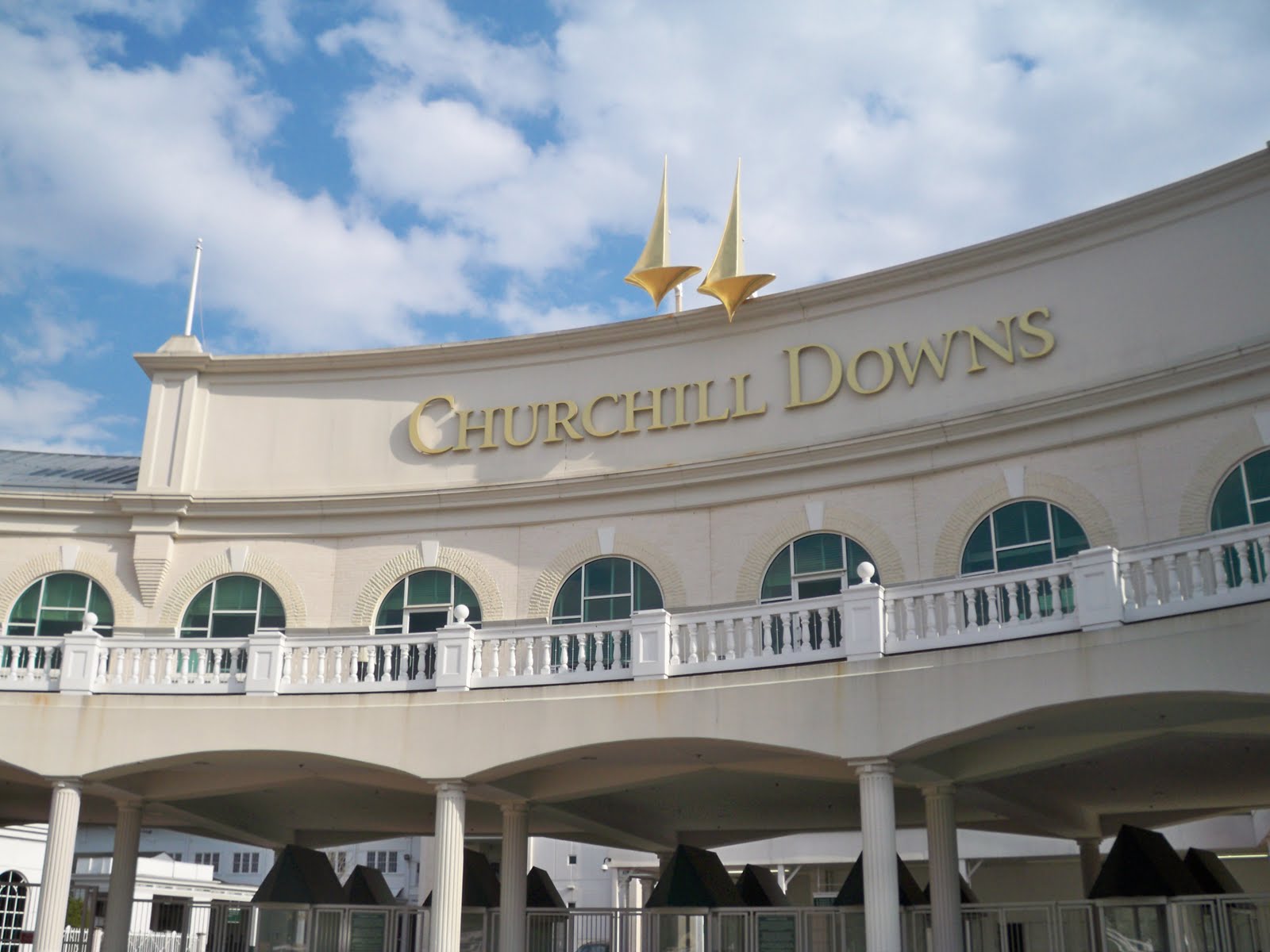
Delegating its CFO and vice president of investor relations, Churchill Downs packed them off to Boston to meet with J.P. Morgan stock analysts. The company is feeling high as a kite about Kentucky Derby prospects, to the point where it provided first-ever revenue guidance on the event: as much as $20 million in cash flow. Half of that reflects a deal with NBC to carry the race in prime time. “While there’s minimal downside risk to the low end, upside to the high end could come from wagering growth,” predicted analyst Daniel Politzer. Normal weather—unlike last year—would help, too.

Continue reading Visiting with Wall Street
Posted on Leave a comment

Meal Deals in Laughlin

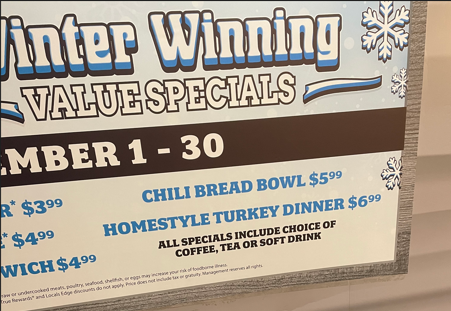
Researching these in advance, we knew where we were heading as soon as we blew into Laughlin for a late lunch: the Aquarius Cafe and the turkey value special. We sat down, the waiter arrived seconds later, we said, “Turkey special,” and he said, “Good choice.” When he delivered it minutes later, we couldn’t believe our eyes. See for yourselves.

That’s right: three thick slices of turkey breast off the bone, mashed potatoes, stuffing, gravy, fresh vegetables right out of the steamer, cranberry sauce, roll and butter, and a drink, all included, for — don’t fall off your chair — $6.99. Believe us when we say, this was better than a lot of Thanksgiving Day home-cooked meals we’ve had.

Aquarius puts out five coffee-shop specials every month. In December, they were a French toast platter for $3.99, country scramble and chicken tender sandwich $4.99, chili bread bowl $5.99, and the turkey. In January, they were three eggs, hashbrowns, toast for $3.99, two eggs, bacon/sausage, and pancakes $4.99, big burger and all you can eat spaghetti $6.99, and a pot roast dinner (which we imagine is like the turkey) $7.99.

On a return visit, just passing through on a drive to southern California, we tried the smashburger.

This was a little different experience, since it was a busy Saturday. The service was noticeably slower, though it seemed like everyone in the Cafe was ordering the burger. It wasn’t bad by any means (we opted out on the American cheese), but after the turkey dinner a couple of months earlier, our standards were very high.

April 1 through June 3, the specials include three pancakes, hash browns, two eggs, and a choice of bacon or sausage $5.99; 16-ounce bone-in ham steak served with two eggs, hash browns, and toast or biscuits and gravy, and drink $6.99; double smashburger with lettuce, American cheese, tomato, onion, and special sauce on a brioche bun, served with French fries, $6.99; and a breaded pork chop plate featuring two pork chops and country gravy with potatoes and vegetables, soup or salad, $7.99. We can’t begin to imagine going wrong with any of them at these prices.

The Aquarius Cafe is, to a certain extent, representative of meal deals all over Laughlin. At the Edgewater, Stockman’s Steakhouse when we were there had on offer burgers, chops, chicken parm, and barbecue chicken and shrimp with AYCE soup or salad for $14-$16. The Tropicana’s Carnegie Cafe was advertising buy one meal and get the second for $1.

And speaking of the Carnegie, we tried the shrimp cocktail there.

These were smallish fresh-water Bay shrimp in the cocktail glass, with a lemon wedge, plenty of sauce, very little filler, and a package of crackers. There were probably 150 shrimp and we kept eating and eating to get to the bottom of glass. For $2.95, we were more than satisfied.

In other posts, we’ll discuss the many snack bars of Laughlin and the excellent prices on meals that aren’t on special, just right off the menus. All in all, Laughlin is a bargain-eaters dream, the way Las Vegas used to be.

Posted on Leave a comment

Broken Yolk

The Broken Yolk Cafe, as the name describes, is a breakfast-restaurant chain with roots that date back to 1979 in San Diego. Today, the brand has 40 locations, mostly in southern California, along with Arizona, Texas, and Las Vegas. Here, it’s now up to five cafes; the first opened in Town Square in 2019, so it’s expanded rapidly around the valley.

With good reason. The chain has received numerous “best-breakfast” awards and was named 2025’s “Top Breakfast Franchise” by Franchise Times. Broken Yolk is popular with locals and southern Californians for its breakfasts and Tex-Mex cuisine. It’s known especially for eggs Benedict, epic portions, fresh ingredients, good service, and not unreasonable prices. We went to the one downtown on Las Vegas Blvd. and E. Carson St., caddy-corner from the big red Fremont Street Experience parking garage, and the place definitely lives up to its rep.

The menu is as big as the food itself. Breakfasts include seven Benedicts ($16-$22), four skillets ($17-$18), a couple of huevos, along with machaca and chilaquiles ($15-$19), a whole page of eggs and omelets, plus pancakes, waffles, French toast, smoothies, and coffees. For lunch, Broken Yolk offers burgers ($17-$19), soup and salad, and sandwiches, such as the BLT ($13) and chicken Caesar wrap ($17).

There’s also a full bar, serving four Bloody Marys ($13), the usual brunch libations, and beer ($8).

When we were there between 11 a.m. and 1 p.m. on a recent Saturday, the place was packed and looking around, we noted that the Benedicts, huevos, and burgers predominated. We tried the smoked salmon and south-of-the-border Benedicts. We were uncertain about the latter — sweet corn cakes topped with carne asada, jalapeno, the two poached eggs, and house-made poblano sauce — but it didn’t disappoint.

The smoked salmon was especially tasty, with capers, arugula, fresh dill, and plenty of luscious hollandaise. The hash browns filled half the Border Benedict plate; we opted for half home fries and half fruit cup, which was a good choice, as they didn’t scrimp on the potatoes. Bring an appetite!

Our bill, with the Bloody Mary, two Benedicts, and tax, came to $63. Not a bargain by any means, but we will say this: It was breakfast and lunch and we didn’t need much dinner.

Posted on Leave a comment

Strip’s Dead-Cat Bounce

For the past year, the bow planes of the U.S.S. Las Vegas Strip have been locked in “dive.” Well, Big Gaming may have finally scraped bottom and started back upward. February saw less than a 1% uptick in Las Vegas Strip winnings, but an uptick all the same. Strip casinos grossed $696 million, while it was Downtown‘s turn for malaise, down 4% to $70 million … despite the valiant efforts of Derek Stevens, who brought 15,000 Canadians back into the fold with his creative “At Par” promotion.

Continue reading Strip’s Dead-Cat Bounce
Posted on 1 Comment

A Surprise Bonus to Online Gambling


This example is specific to my location and circumstance, but the idea is most likely applicable to a lot of situations.
I’m in the Detroit area and play at Motor City Casino (MCC). The video poker is the 98.5%–99.0% variety. Between free play, comps, and mailers it’s an OK recreational play. One big perk is Signature status, which gets you and a guest into their Signature lounge. I would pay $75 a person for the meal there. The food is that good.

Now, to get Signature status, you need to earn 15,000 Signature points in six months. For video poker, $5.60 coin in gets you 1 point, $3.35 on slots. You need 90 regular points for 1 Signature point.

So in six months, you need to play $1,350,000 through on 99% video poker. The cost would be $13,500. The food is very good, but not worth $2,400 a month. There is 0.18% in free play and 0.112% in comps. That gets the cost down to about $10,500 (cashing in the comps for free play). That’s still too much to pay.

But recently, MCC started making comps redeemable at 1-1 for free play (formerly 3-1). Now, if I play the best VP game at 99.0% and add in 0.18% for base free play and 0.112% for comps converted to FP, we’re at about 99.29%. Add 0.05% for mailers and we’re up to 99.34%. But a 0.66% loss is still too much to give up on $1.35 million.

Another promo MCC runs pretty frequently is on Saturdays, if you earn $10 or more in comps, you get the same amount in free play. Comps for VP are 0.112%, so you need to run about $9,000 through on video poker. Slot comps are 10 times that, so finding some advantage slots is the much better play. That makes the VP free-play return up to about 0.4%.

Getting there, but still not enough.

Enter online play. If you play on FanDuel Detroit, you earn Signature points and comps at the same rate as live play. The best game is NSUD at 99.72%. Add the cash value of the comps (0.11%) and we’re at 99.83%. At level 4 on Fan Duel, you get a 15% loss rebate weekly up to $35. That adds about $50 a month (estimated). Now we’re getting close.

FanDuel also gives about $300 a month in bonuses.

Let’s add it all up:

For $1,350,000 coin in over 6 months on Fan Duel

Base game loss = -$3,780

Converted FP = $1,497

Fan Duel bonuses = $1,800

Loss rebate = $300

I’m down to a cost of $183. Playing at that level on FanDuel gets me to their VIP level. The loss rebate increases to 25% to $125 per week. Also, as a Signature member, the secret code bonus at MCC (twice a week on average) increases from $5 to $20. I’m sure there will be some other perks as well. I expect the Fan Duel bonuses to increase. I expect the Motor City mailers to increase.

What was once too expensive a proposition to attain Signature status via live casino becomes viable using their online casino partner.

A lot of conditions must line up for this to work. Even if you aren’t a typical online player, it’s worth checking out. Throw in the new-player sign-up bonuses and the convenience of getting in action whenever you feel like it and it might just be enough to gain status at your local casino.

I will report out how good the Fan Duel VIP program is as I gather more info. This will be the real test to see if this online play is worth it or not.

Also see my Las Vegas Savings Tips page for more ideas.

Posted on 2 Comments

A Change in Strategy?

Bob Dancer

Last November, I played during a promotion at Caesars Atlantic City. It was a juicy promotion — and I took a bath. I mentioned in an article that the best video poker I could find for high stakes was 9/6 Double Double Bonus (98.98%). A reader responded that they have 9/7 Double Bonus (99.11%) for $10 on a few machines. Although the DB game pays more than the DDB game, it’s much more difficult to play well. As it turns out, I played 10/7 DB for many hundreds of hours back when I was first starting — eventually co-wrote a Winners Guide on that game — and have taught classes (Beginners, Intermediate, and, occasionally, Advanced) several dozen times. In the past few years, I played the dollar version of that game at Arizona Charlie’s Decatur and Four Queens until they took the games out at both places. Suffice it to say, I know the game well and the extra difficulty of DB over DDB is a non-factor for me.

I looked and couldn’t find these machines. How hard could it be? There aren’t that many video poker machines in the High Limit Slot area at Caesars. The reader sounded knowledgeable, so I looked harder. I found the game, but it was not what I was expecting.

The game is single-line Good Times Pay for $5. If you bet five coins, you get regular 9/7 DB. If you bet between six and ten coins, you get multipliers on every hand. These do not affect the 99.11% return on the well-played game, but the multipliers do greatly affect the variance.

On the 10-coin version, for example, there are 30 boxes from which the multiplier may be randomly drawn. Fifteen of those boxes are 1x. Ten of those boxes are 2x. And the remaining five boxes are one each: 3x, 4x, 5x, 6x, and 7x. The mean value of the multipliers is 2x, and since you play 10 coins to earn these multipliers instead of the normal five, the overall return isn’t affected. 

You learn the value of the multiplier as soon as you bet and before you select the cards to hold. For knowledgeable players, the size of the multiplier doesn’t affect how the hands are played. But it can easily affect the emotions. Consider a 6x multiplier when dealt AAA82. You’re going to hold the aces, of course, but if they connect, you’ll have a $24,000 jackpot rather than the typical $4,000 the hand regularly pays. That can get the heart pumping a little.

It’s easy to dream of getting the royal flush with a 7x multiplier, which pays a very attractive $140,000 on these machines, but you only get that multiplier 1-in-30 royals. Because you hold flush kickers in this game, royals only come about every 48,000 hands or so — making the cycle for the royal with a 7x multiplier 1,440,000 hands. I am almost certainly never going to play that many hands on these machines — but it could happen. And if I’m forced to put up with a 6x multiplier instead, winning a measly $120,000, I’ll find a way to deal with it. Not even Bob Dancer runs well all of the time!

The 9/7 version of the game is played the same as the 10/7 version with two major differences. On a hand like AA442, you hold two pair when playing 10/7 and just the aces when playing 9/7. This is a major mistake when played incorrectly — around $1.80 times whatever multiplier you have for the $50 bet.

The second difference consists of a 4-card flush with two high cards along with a pair of kings, queens, or jacks (like K KQ73). You hold the kings in 10/7 and the 4-flush in 9/7. This mistake is not worth much —less than two cents times the multiplier for the same $50 bet. Still, I’ve made a history of seeking the correct play even when smaller than this, and see no reason to stop now.

There are a few less common differences that aren’t worth much. On this trip, I ignored them. If another promotion comes about that’s at least as good as the one I’m playing, I just might study the relevant section of the Winners Guide and play with the more-accurate strategy.

My trip was scheduled from Friday February 20 to Monday evening, February 23. There was free play to pick up and a play-up promotion in February. Unfortunately, that part of the country got slammed with a severe snow-and-wind situation and I wasn’t able to fly home until Wednesday morning, February 25. The play up allowed enough optional iterations so playing for an extra day and a half was a feasible option. It was no problem getting my room-comp extended.

I didn’t count the number of times I was dealt a high pair (other than aces) and a four-flush with two high cards, but it must have been a couple of dozen times or so. With average luck on 24 trials, I should have drawn a flush 4.5 times. This time, however, I drew the flush zero times — throwing away a high pair every time. With an average-sized multiplier, I threw away at least $1,200 — and surely some of the time the high pair would have turned into trips, full houses, or (it’s a long shot) quads.

It crossed my mind that since going for the flush was only worth pennies more than holding the high pair, and the play certainly wasn’t successful on this trip, that maybe I should start holding the high pair. I know many players would have made this adjustment (if they weren’t already holding the high pair to start with!)

While the subject did cross my mind, I didn’t act on it. I continued to hold the four-flush every time — and will do so in the future. I believe the right play is the right play — even when I run badly. My career is based on my strongly held belief that over time it will even out, and making the best play every time will lead to better results than making lesser plays.

Some of you will follow my lead on this and some won’t. Without calling any of you names, the saying that starts, “You can lead a horse to water . . .) seems appropriate here.